Living in Gilroy California: Space, Charm, and Connection
June 18, 2026
June 18, 2026
Living in Gilroy, CA 95020 offers a suburban lifestyle with median single-family home prices around $975,800. Situated in southern Santa Clara County, this city of 60,390 residents features 69.8% detached single-family homes, top outdoor recreation like Henry W. Coe State Park, and direct U.S. 101 commute access to San Jose.
Metric / Feature | Gilroy Local Value | Regional Santa Clara County Context |
|---|---|---|
Median Home Value | $975,800 | Affordable entry point vs. $1.8M county average |
Housing Stock Breakdown | 69.8% Detached Single-Family | Suburban, low-density residential layout |
Average Commute Time | 33.9 Minutes | Direct access via U.S. 101 and Caltrain |
Primary Open Space | Henry W. Coe State Park (87,000+ acres) | Largest state park in Northern California |
Compare available real estate listings or explore detailed South Bay market guides to find your ideal community.
Choose your path:
Gilroy sits at the southern gateway to Silicon Valley, shaping its unique appeal for home buyers seeking extra space. You get a established city with full municipal services and sprawling residential neighborhoods, but in a significantly more relaxed environment than denser South Bay cities to the north.
Municipal estimates describe Gilroy as a place defined by small-town charm, open natural spaces, and strong civic spirit. With a population of 60,390 as of 2024, Gilroy is large enough to support extensive retail centers, diverse dining, and public infrastructure, while remaining distinct from the urban centers of San Jose and Santa Clara.
Gilroy's agricultural roots remain central to its identity. Early development was driven by fruit orchards, followed by row crops including tomatoes, sugar beets, and garlic. Today, Gilroy maintains its historic distinction as the Garlic Capital of the World, which serves as a core part of the city's local culture.
The local population reflects a vibrant mix of households. Census data shows Gilroy is 59.4% Hispanic or Latino, 24.1% foreign-born, and 27.5% under age 18, with an average household size of 3.43 people. These demographic figures highlight the family-centered atmosphere that characterizes everyday life in the community.
Gilroy is primarily a single-family detached housing market. According to the city's Housing Element report, 69.8% of local housing units are single-family detached, compared with 23.1% multifamily units, 5.3% single-family attached homes, and 1.9% mobile homes.
For home buyers, this offers a suburban environment featuring wider neighborhood streets, larger lot sizes, and private yards. U.S. Census QuickFacts reports a 62.8% owner-occupancy rate, with a median owner-occupied home value of $975,800 and median gross rent at $2,270, providing a competitive alternative to northern Santa Clara County markets.
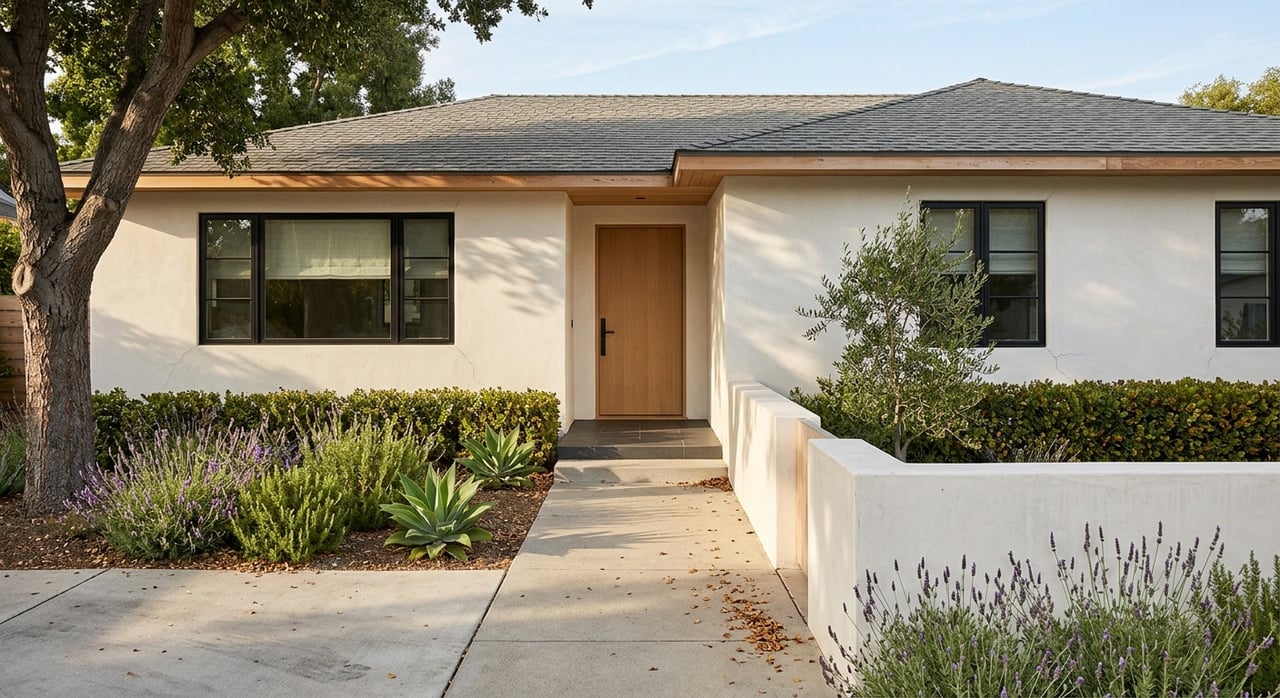
Gilroy's housing stock ranges from historic mid-century neighborhoods to modern master-planned developments. Older residential areas feature Ranch and Minimal Traditional architecture, alongside mid-century tract developments that introduced California Contemporary designs.
A prime example of modern residential expansion is Glen Loma Ranch. Spanning 359 acres on the city's western side, this master-planned community includes 145 acres of dedicated parks and open space alongside 1,467 planned residential units. Infill developments like the Royal Way Townhomes (45 two-story units) continue to expand local choices for buyers seeking low-maintenance living.
Gilroy municipal codes support accessory dwelling units (ADUs) and junior ADUs (JADUs) on single-family, duplex, and multifamily properties. This regulatory flexibility allows homeowners to build guest houses, multigenerational living suites, or potential long-term rental units to maximize property utility.
Gilroy's layout is predominantly car-oriented, anchored by major arterial highways. U.S. 101 serves as the primary north-south commuter artery connecting residents to Morgan Hill, San Jose, and Salinas. State Route 152 provides a critical east-west corridor, linking Gilroy east to Interstate 5 and west to Watsonville and Highway 1.
Census figures report an average travel time to work of 33.9 minutes for Gilroy residents. Transit connections are anchored by the Gilroy Transit Center, where weekday commute-hour Caltrain service runs north toward San Jose Diridon and San Francisco. VTA bus routes (including Express Route 68, 84, 85, 86, 121, and Rapid 568) connect local commuters to regional transit hubs across Santa Clara County.
Access to regional parks is one of Gilroy's premier lifestyle benefits. The city is surrounded by public parks, golf courses, and outdoor recreation areas including Mt. Madonna County Park, Coyote Lake-Harvey Bear Ranch County Park, and Henry W. Coe State Park.
Henry W. Coe State Park is the largest state park in Northern California, preserving over 87,000 acres of wilderness. With its western entrance located directly in Gilroy, residents enjoy immediate access to extensive hiking, mountain biking, and horseback riding trails right in their backyard.
Downtown Gilroy serves as the historic commercial core for dining, retail, and civic gatherings. The downtown district features historic architecture, boutique shops, local services, and an emerging food scene.
Community events held downtown include the Third Friday Night Art Walk, the Downtown Live Music Series, the Garlic City Car Show, and La Ofrenda Festival. Local dining anchors include long-standing establishments such as Old City Hall Restaurant, The Milias Restaurant, and Garlic City Cafe.
Gilroy is also a hub for wine tasting. Over 20 wineries and tasting rooms operate within city limits, forming part of the broader Santa Clara Valley Wine Trail, which features more than 30 regional wineries showcasing local vintages.
Gilroy Gardens Family Theme Park is one of the city's signature destinations. Designed around a horticultural theme, the park features over 10,000 trees, land and water rides, educational exhibits, and the world-famous Circus Trees.
The world-famous Gilroy Garlic Festival remains a foundational civic tradition. Hosted annually in late July, the event celebrates the region's agricultural heritage while raising millions of dollars for local schools, sports teams, and non-profit organizations.
Related Reading:
About Jen Marley
Jen Marley is a top-producing Silicon Valley real estate professional affiliated with Luxury Presence and Christie's International Real Estate. Ranking in the top 4% of agents globally, Jen brings over two decades of experience guiding home buyers and sellers across Gilroy, Morgan Hill, San Jose, and Los Gatos. In 2025, her total South Bay sales volume exceeded $45 million.
Gilroy is globally recognized as the Garlic Capital of the World. It is known for its rich agricultural history, community traditions like the Garlic Festival, affordable single-family housing stock, and scenic location in southern Santa Clara County.
As of 2026, the median owner-occupied home value in Gilroy is approximately $975,800. Single-family detached residences generally range from $900,000 to $1.5M+, while townhomes and condominiums start around $650,000.
Gilroy is located approximately 30 miles south of Downtown San Jose along U.S. 101. During peak commute hours, driving times average 35 to 50 minutes. Weekday Caltrain service and VTA Express buses offer public transit alternatives.
Students in Gilroy are served by the Gilroy Unified School District (GUSD), which oversees 8 elementary schools, 3 middle schools, and 2 comprehensive high schools (Gilroy High School and Christopher High School).
Gilroy features local municipal parks alongside direct access to Henry W. Coe State Park (87,000+ acres), Mt. Madonna County Park, and Coyote Lake-Harvey Bear Ranch County Park for hiking, camping, and boating.
Source Note: Housing data, population statistics, and travel metrics sourced from U.S. Census Bureau QuickFacts, the City of Gilroy Housing Element, and Santa Clara County Assessor records for 2026.
Stay up to date on the latest real estate trends.
Separating the House That Feels Right From the One That Actually Is.
A Detailed Overview for a Successful Sale in San Jose.
If you are a buyer or seller who lives in Santa Clara, San Mateo, Santa Cruz, Sacramento or Placer County or if you are looking to relocate, Jen would be honored to assist you. Jen has a global referral network through Coldwell Banker Realty and she can connect you with the best local agent anywhere nationwide.
Jen Marley Bright | CA DRE# 01417183
(408) 605-9960
[email protected]
Address
410 N Santa Cruz Avenue
Los Gatos, CA 95030
&